Best Crypto for Gambling: Bitcoin vs Ethereum vs Stablecoins
By Steven Stone, Founder and Editor · Published · Updated · 12 min read
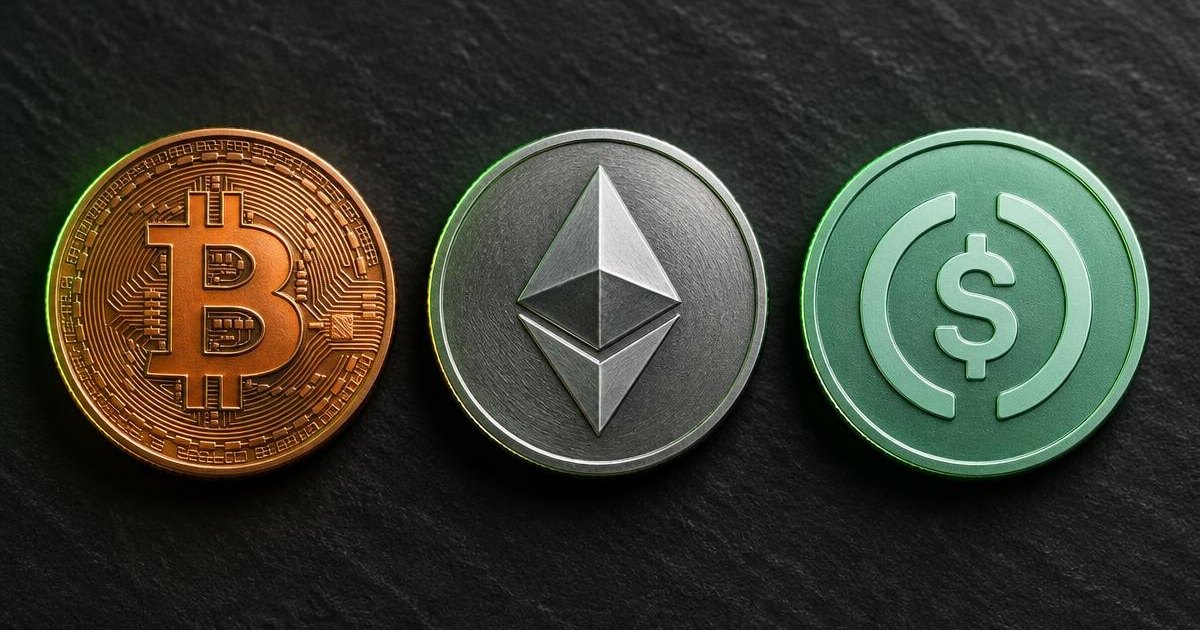
The best crypto for gambling is not a universal asset or ticker. It is a payment choice constrained by the exact network a service supports, the token it accepts, the wallet you control and the risks you can afford. Bitcoin, ether and stablecoins expose users to different combinations of price movement, transaction costs and operational dependencies. Choosing between them cannot make a game profitable or an operator trustworthy. Start with compatibility and withdrawal terms, then compare the complete route your funds would take.
Best crypto for gambling: start with the payment route
A payment asset is only useful when the recipient supports the form you are sending. Bitcoin on the Bitcoin network is not interchangeable with a token representing bitcoin elsewhere. Ether on Ethereum mainnet is not automatically credited when sent on a different chain. A stablecoin ticker alone does not identify its network or issuing contract.
Before buying or transferring anything, inspect the deposit page for the exact asset, network, minimum amount and confirmation policy. Then check the withdrawal page separately. A service may accept an asset but settle withdrawals in another, apply conversion terms or support fewer withdrawal networks than deposit networks. These details affect the complete cost of using it.
Crypto casino explained separates payment methods from how the underlying service operates. Funding with a blockchain asset does not mean bets settle on-chain or balances remain under your control. An operator can accept crypto while maintaining an ordinary custodial account system. Evaluate the service before optimising the payment method.
Bitcoin: native payments and market-price exposure
Bitcoin's own documentation describes transactions as transfers of value recorded on its blockchain, with wallets using private keys to authorise spending. For a gambling deposit, native BTC means bitcoin transferred through the Bitcoin network to a supported receiving address. Do not treat a wrapped bitcoin token on another chain as the same deposit instrument.
BTC introduces price exposure between acquisition, deposit and eventual withdrawal. A balance denominated in bitcoin can change in purchasing power even when no bet occurs. Some services convert deposits into an internal currency, creating a different exposure and possibly a spread. Read which unit determines stakes, payouts and cash-out amounts rather than assuming the displayed symbol tells the whole story.
Transaction timing depends on network conditions, fees, block inclusion and the recipient's confirmation requirement. Bitcoin's user guidance warns about irreversibility and other payment responsibilities. A deposit seen in a wallet may not yet satisfy the receiving service's crediting policy. Never use a general timing estimate as a promise that funds will be available before a particular event.
Bitcoin network address formats can differ, and the sending wallet must support the destination format. A service may also offer Lightning deposits, which use a different payment process from an ordinary on-chain transfer. Follow the supported method precisely; an invoice and an on-chain address are not interchangeable instructions.
Ethereum: distinguish ETH from the network around it
Ether, usually displayed as ETH, is Ethereum's native asset. It can fund transfers and pays transaction fees on Ethereum mainnet. The Ethereum ecosystem also contains tokens, smart contracts and other networks. Those connections do not mean every service accepting ETH supports every chain where an asset with that name appears.
For a native ETH transfer, verify the destination network as well as the address. For a token transfer, verify the token contract on that network. An address beginning with 0x can have the same format across several networks, but the recipient's account system may monitor only one. A technically valid transaction on the wrong chain may never be credited.
Gas expenditure depends on the operation and prevailing network conditions. Sending ETH, approving a token and interacting with a betting contract can involve different work and costs. Ethereum's gas documentation explains the fee mechanism; it does not imply every action has one permanent price. Budget for withdrawals and any approval transactions rather than using the deposit transfer as your entire estimate.
Ethereum also creates contract-interaction risks that are distinct from market volatility. A malicious approval can expose tokens even if the wallet retains its private key. The wallet tracker helps inspect available public transfers; it does not assess the safety of a spending permission. Read the transaction request and reject unexpected approvals or signatures.
Stablecoins: price targets do not eliminate risk
Stablecoins aim to track a reference value, commonly a national currency. They may reduce exposure to the price movements of BTC or ETH when the reference currency matches the user's needs. They do not make gambling balances risk-free, guarantee redemption or ensure the market price always stays at the intended level.
An issuer-backed stablecoin introduces questions about reserves, redemption eligibility, intermediaries and issuer control. The Consumer Financial Protection Bureau's statement on stablecoin policy highlights consumer risks as part of the case for oversight. A token balance is not automatically the same legal claim as money in an insured bank account. Read the issuer's current terms instead of assuming familiar currency branding confers equivalent protection.
Some issuers retain technical powers to block addresses or freeze particular token holdings. Those controls differ from the ability of a blockchain validator to include a transaction. A transaction can be technically possible on the network while restricted under token rules. Depegging, access restrictions and changes in redemption arrangements remain relevant even when daily price movements appear small.
Circle describes USDC as available on multiple blockchains, but that is not a promise that a particular gambling service accepts every deployment. Confirm the currently supported network and the exact issuer-published contract or native asset identifier. Use official issuer documentation to check identity; do not rely on the token name, logo or an unsolicited wallet link.
Native issuance versus a bridged representation
An issuer-native stablecoin is issued directly on the specified supported network. A bridged or wrapped version generally represents an asset locked or otherwise accounted for elsewhere. That representation adds bridge, custody or messaging dependencies. Similar names, including a suffix added to a ticker, do not prove equivalent redemption rights or deposit support.
Bitcoin, ETH and stablecoins compared
This table compares risk categories rather than declaring a winner. Actual costs and crediting times must be checked for the specific network, transaction and receiving service. Neither a low fee nor a stable reference price establishes that an operator is safe.
| Factor | Native BTC | Native ETH | Issuer-backed stablecoin |
|---|---|---|---|
| Price exposure | Bitcoin market price | Ether market price | Reference-currency, depeg and issuer risks |
| Identity check | Bitcoin network and supported address format | Exact network and native asset | Exact network plus issuer contract or asset identifier |
| Network fee funding | BTC for an on-chain transaction | ETH on Ethereum mainnet | Usually the network's gas asset, unless explicitly sponsored |
| Additional dependencies | Wallet and receiving service | Wallet, network and any contract interaction | Issuer plus token rules; bridge dependencies if wrapped |
| Crediting | Recipient confirmation policy | Recipient network and confirmation policy | Supported token, network and recipient policy |
Avoid a permanent fee or speed league table
Congestion, transaction complexity, exchange withdrawal charges and operator processing all affect the result. Compare the complete route at the time of use. A chain's block cadence is not the same thing as a guaranteed deposit-crediting time or withdrawal service level.
A practical checklist before sending funds
First, copy the deposit instructions from the service's authenticated interface. Match the asset, network and token contract where relevant, then verify the destination on your sending wallet's confirmation screen. Recheck after using the clipboard. An address with the right shape is not proof that it belongs to the intended recipient or that the selected chain is supported.
Second, account for gas. A wallet holding a stablecoin may still be unable to move it without the network's fee-paying asset. On Ethereum mainnet that asset is ETH. Other networks can use different native gas assets, and a sponsored transaction feature should be treated as a specific arrangement rather than a universal property of stablecoin transfers.
Third, inspect minimum deposits and withdrawal conditions before making a test. A small test can reveal some route errors, but it may fall below a crediting threshold or incur disproportionate fees. A successful test also does not guarantee future withdrawals. Retain the transaction hash, network name, asset identifier and the instructions you followed.
Fourth, do not improvise after choosing an unsupported network. Contact the recipient's official support channel, understanding that recovery may be impossible or discretionary. Never send additional funds to an alleged recovery address provided through an unsolicited message. How to research a dApp provides checks for verifying official documentation and control structures.
Before confirming
- Match the network on both sending and receiving screens.
- Verify the full destination and the token contract when applicable.
- Keep enough of the correct gas asset for the intended route.
- Check crediting thresholds, conversion terms and withdrawal availability.
- Stop if the instructions conflict or the supported network is unclear.
Payment choice does not fix custody or game mathematics
After a deposit is credited, your exposure may be to an operator's internal ledger rather than an independently spendable token. Holding your own wallet keys before depositing does not preserve custody afterwards. Check who controls the deposited assets, whether withdrawal requests need approval and what restrictions apply to unsettled bets or promotional balances.
For contract-based products, inspect administrator powers, upgrade mechanisms and oracle dependencies. Web3 gambling architecture explains why wallet login is not equivalent to decentralisation. The network carrying a payment can function correctly while the receiving application remains unsafe, unavailable or dishonest. Treat payment execution and service integrity as separate research questions.
The game itself also retains its payout structure regardless of the deposit asset. House edge explained describes why a stable balance unit cannot erase negative expected returns. Similarly, provably fair verification concerns checking outcome generation, not guaranteeing profits or protecting against every custody failure.
Public records can help establish whether a transfer reached an address, but not necessarily why an internal account was credited incorrectly. On-chain gambling data distinguishes observed transfers from claims about users, revenue and trust. Keep realistic expectations about what a block explorer can prove when resolving a payment dispute.
How DappScope helps you compare without a universal winner
DappScope provides a framework for comparing products and tracing the evidence behind their claims. Begin with the map or explorer, then use the review methodology to organise questions about custody, contract identity and operational transparency. Discovery tools are research starting points, not assurances that a service is suitable for you.
A sensible comparison records the same fields for every route: asset identity, exact network, gas requirement, minimum deposit, conversion policy and withdrawal conditions. Add price exposure and, for stablecoins, issuer and bridge dependencies. This is more useful than ranking tickers without reference to the destination service or the user's intended payment path.
There is no universal best asset. Native BTC may fit one supported route, native ETH another, and an issuer-native stablecoin another. The relevant decision is whether the entire route is understandable, supported and affordable within a strict loss limit. If it requires unexplained bridging, unsupported networks or funds you cannot afford to lose, do not proceed.
This article is general information, not tax, legal or investment advice. Treatment can depend on jurisdiction and personal circumstances. Keep records and consult an appropriately qualified professional for questions specific to you. Adults aged 18+ only, or the higher local legal age, should consider gambling at all. Set limits beforehand and stop if those limits become difficult to maintain.
Four criteria for comparing supported payment routes
Compare fees, speed, price stability and privacy, but only among routes supported by both sender and recipient. Cost includes exchange withdrawal charges; speed includes the casino confirmation policy; stability concerns the balance unit; privacy concerns the public trail linking addresses to accounts.
Network fee and speed comparison
The table compares common options by protocol characteristics. Fees are described relative to each other because actual costs change with network demand and exchange pricing. Check live fees before each transfer.
| Asset and network | Typical fee level | Block time | Price stability | Notes |
|---|---|---|---|---|
| Bitcoin (BTC) | Medium to high, demand driven | About 10 minutes | Volatile | Widest support, slow credits |
| Ether on Ethereum mainnet | Medium to high, demand driven | About 12 seconds | Volatile | Expensive for small deposits when busy |
| USDT or USDC on Ethereum | Medium to high | About 12 seconds | Currency target, not guaranteed | Stable value but mainnet costs |
| USDT on Tron | Low | About 3 seconds | Currency target, not guaranteed | Common casino route |
| USDT or USDC on Solana | Very low | Sub second slots | Currency target, not guaranteed | Fast, check token support |
| Litecoin (LTC) | Low | About 2.5 minutes | Volatile | Cheap alternative to BTC |
| USDT or USDC on Ethereum layer 2s | Low | Seconds | Currency target, not guaranteed | Support varies by casino |
Block time is not the same as credit time. A casino that waits for several Bitcoin confirmations can take an hour or more to credit a deposit, while the same policy on a faster chain completes in minutes.
USDT versus BTC for casino deposits
USDT or USDC can simplify currency-based budgeting on a supported low-cost network. BTC can suit users who already hold it and accept market-price exposure, especially where Bitcoin support is better or transfers are large enough that fixed fees matter less. These are payment tradeoffs, not guarantees of value or safety.
For example, a 0.01 BTC balance changes in reference-currency value by 5 percent if BTC moves 5 percent, even without a bet. Separate market movement from game results when keeping records.
Low-fee routes and the complete transfer cost
Bitcoin fees depend on transaction size and competition for block space. Tron, Solana and Ethereum layer 2 routes can have lower transfer costs, subject to live resource pricing and support. Compare exchange charges plus network fees and the eventual casino withdrawal charge. A single planned deposit can cost less than several top-ups; do not increase the budget to save fees. Check minimum deposits and the exit route before sending. Review per-asset flows with the wallet tracker.
Privacy and casino payment records
Crypto is often described as anonymous. On public blockchains it is pseudonymous: addresses are not names, but every transfer is visible forever, and exchanges link addresses to verified identities.
That has consequences for players:
- Exchange visibility. An exchange can see that you withdrew to an address that later sent funds to a casino. Some exchanges restrict gambling transfers in their terms.
- Address reuse. Sending from the same wallet you use for savings links your whole balance history to casino activity.
- Casino checks. Many operators run identity checks at withdrawal, regardless of which coin you used.
A dedicated wallet for gambling keeps records clean and separates your savings from sites you connect to. Privacy focused coins exist, but support is limited, some casinos and exchanges do not accept them, and their legal treatment differs between countries. Use privacy tools only within the law where you live, and never to bypass a casino's or a regulator's rules.
Before choosing an operator, independent guides at HashCashCow and reviews at Sophia Crypto list which payment methods individual casinos accept, which saves failed transfers.
Frequently asked questions
Is Bitcoin always the best crypto for gambling?
No. Suitability depends on the supported payment route, price exposure, total costs and withdrawal conditions. A service accepting native BTC might not accept wrapped bitcoin or Lightning payments. Confirm the precise method rather than assuming all bitcoin-labelled transfers are interchangeable.
Are stablecoins safer than BTC or ETH?
They target a reference value, which can reduce some market-price exposure, but they introduce other risks. Consider issuer controls, reserves, redemption access, depegging and any bridge involved. They do not protect deposits against an operator failure or make gambling losses less real.
Can I send a token to the same address on another network?
The address may be technically valid on several networks, but the recipient may support only one. Sending on an unsupported chain can leave a deposit uncredited and recovery uncertain. Match both network and asset to the receiving instructions before signing.
Why do I need ETH when sending a stablecoin?
On Ethereum mainnet, ETH normally pays the transaction fee even when the transferred asset is a stablecoin. Other networks may use another gas asset. Some applications sponsor fees, but that depends on their specific design and should not be assumed for an ordinary wallet transfer.
Is a bridged stablecoin identical to issuer-native USDC?
No. A bridged representation depends on an additional mechanism connecting assets across networks. It can have a different contract, custody structure and support policy. Verify the issuer-native deployment and the recipient instructions rather than relying on a matching ticker or similar name.
Where can I get help if gambling becomes difficult to control?
Stop depositing and seek support rather than switching payment assets or chasing losses. Gambling Therapy offers international support and information. Consider available blocking and self-exclusion tools, and speak with someone you trust. Crypto transactions do not make gambling anonymous, harmless or appropriate for minors.
Which network gives low fee casino deposits?
Networks designed for low per transaction costs, such as Tron, Solana and Ethereum layer 2s, are usually cheapest. Always add the exchange withdrawal fee and confirm the casino supports the same network.
Is crypto gambling anonymous?
No. Public blockchains record every transfer, and exchanges link addresses to identities. Casinos may also verify identity at withdrawal. Crypto is pseudonymous, not private by default.
Website sources
- Bitcoin: How it works · View source page
- Bitcoin: Things you need to know · View source page
- Ethereum: Gas and fees · View source page
- Ethereum: Smart contract security · View source page
- CFPB: Director statement on the stablecoin report · View source page
- Circle: USDC and supported blockchains · View source page
- Gambling Therapy: Support · View source page
- Ethereum.org: gas and fees · View source page
- Gambling Therapy: free international gambling support · View source page
General information only, not legal or financial advice. 18+ only. Explore crypto casino reviews, casino analytics and the FAQ.
Investigate the evidence
Explore public wallet movements and casino observations, with incomplete coverage and missing values clearly labelled.
Casino hot-wallet and deposit pages: